Which Battery Powered Leaf Blower Is Best
Deciding which battery powered leaf blower is best starts with matching power, weight, and battery life to your yard size. Our step-by-step approach helps you compare real options and avoid common mistakes. Follow along to pick a tool that saves time and effort on every cleanup job.
Choosing which battery powered leaf blower is best does not have to feel overwhelming. This guide walks you through simple steps to compare models, understand key specs, and make a confident purchase. You will learn how to match features to your yard, avoid common pitfalls, and enjoy reliable performance season after season.
Key Takeaways
- Match power to yard size: Higher CFM works best for large areas while lighter models suit small spaces.
- Check battery runtime: Look for at least 45 minutes of run time on a single charge for most jobs.
- Compare weight and comfort: Choose a blower under 10 pounds if you need to work for long periods.
- Review noise levels: Quieter models help avoid disturbing neighbors during early morning use.
- Factor in warranty length: A three-year or longer warranty protects your investment.
- Read recent user reviews: Real feedback reveals how well each model holds up over time.
Quick Answers to Common Questions
How much CFM do I really need?
Most homeowners do well with 400-600 CFM. Larger properties or heavy wet leaves may need 650 CFM or more.
Can I use one battery for multiple tools?
Yes, many brands share the same battery platform across their lineup, saving money on extra packs.
Is variable speed worth the extra cost?
Variable speed helps conserve battery life and gives better control on delicate surfaces like flower beds.
How often should I charge the battery?
Charge after each use and store at about 50 percent if you will not use the blower for several weeks.
Do I need a shoulder strap?
A strap helps during long sessions and reduces arm strain, especially on heavier models above nine pounds.
Determine Your Yard Size and Needs
Start by measuring your property and noting the type of debris you face most often. Small patios or walkways need only light airflow, while larger lawns with heavy leaves require stronger motors.
Write down how often you will use the tool. Daily users benefit from fast-charging batteries, while weekend gardeners can choose more affordable options. This quick assessment prevents buying more power than you need or too little to finish the job.
Evaluate Power and Battery Life

Visual guide about Which Battery Powered Leaf Blower Is Best
Image source: pic.nximg.cn
Power is measured in CFM (cubic feet per minute) and MPH (miles per hour). Higher numbers move leaves faster but drain batteries quicker.
Look for models that offer variable speed settings. This feature lets you use low power for light cleanup and save battery for tougher spots.
Battery voltage also matters. Twenty-volt systems work well for small yards. Forty-volt and fifty-six-volt batteries deliver more punch for bigger properties. Always check how long each battery lasts at full speed before buying.
At a Glance
Visual guide about Which Battery Powered Leaf Blower Is Best
Image source: popsci.com
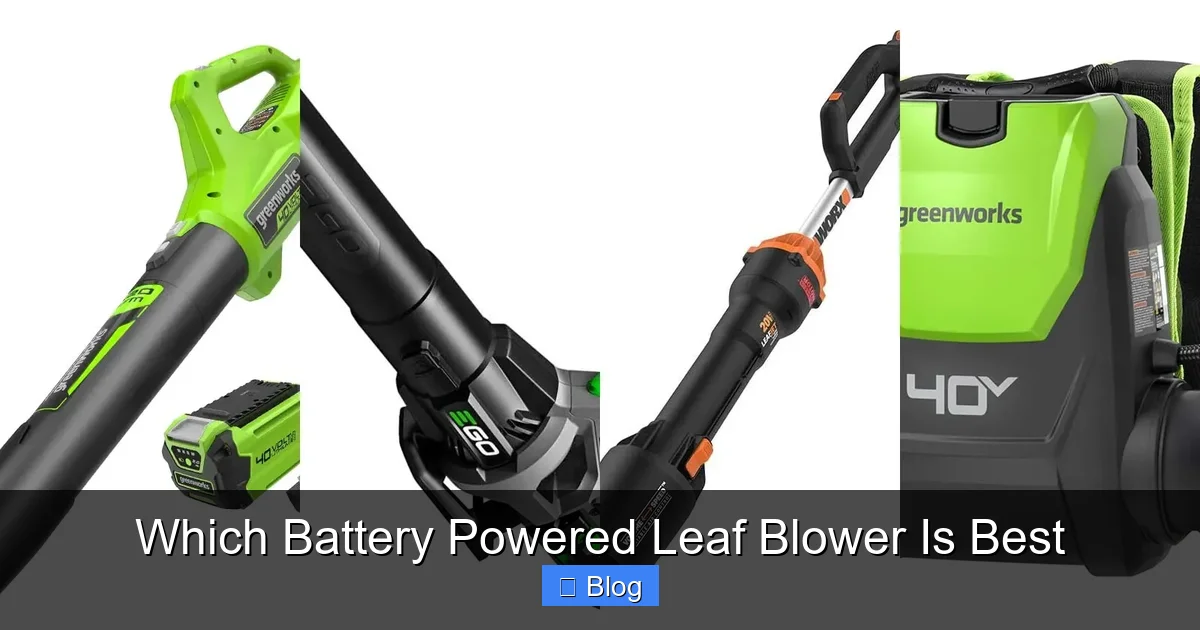
Here is a quick look at four popular choices to help you see the differences right away.
Use this table to narrow your list based on the numbers that matter most to you.
Check for Comfort and Portability
| Model | CFM | Weight (lbs) | Runtime (min) | Price Range |
|---|---|---|---|---|
| EGO 56V | 650 | 8.5 | 75 | $250-350 |
| Ryobi 40V | 480 | 7.5 | 45 | $150-220 |
| Milwaukee M18 | 600 | 9.0 | 60 | $300-400 |
| DeWalt 60V | 600 | 9.5 | 55 | $280-380 |
A comfortable grip and balanced weight reduce fatigue during long sessions. Test the handle shape and strap options if the model includes them.
Many users prefer cordless designs that let them move freely without tripping over cords. If you store the blower in a garage or shed, measure the space to ensure it fits easily when not in use.
Look at Price and Warranty
Set a realistic budget that includes at least one spare battery. Higher-priced models often include better motors and longer warranties.
Read the fine print on coverage. A strong warranty protects against defects and gives peace of mind. Many top brands now offer three to five years of protection on the tool and battery.
Read Reviews and Test in Person
Search for recent owner feedback on noise, battery life, and durability. Videos showing real yard use reveal how the blower performs with wet or dry leaves.
Whenever possible, visit a local store to hold the unit. Feel the balance and listen to the motor. This hands-on step confirms whether the model feels right before you buy.
Troubleshooting Common Issues
If the blower loses power quickly, check the battery contacts for dirt and try a different battery pack. Weak airflow often means clogged vents or a full debris bag. Clean these areas regularly.
Unusual noises usually point to loose screws or worn fan blades. Tighten hardware or replace the blade assembly following the manual. Most problems resolve with simple maintenance.
In the end, the best choice depends on your specific yard and how often you clean it. Take time to compare specs, read reviews, and handle a few models if you can. The right battery powered leaf blower will make every outdoor task faster and more enjoyable.