
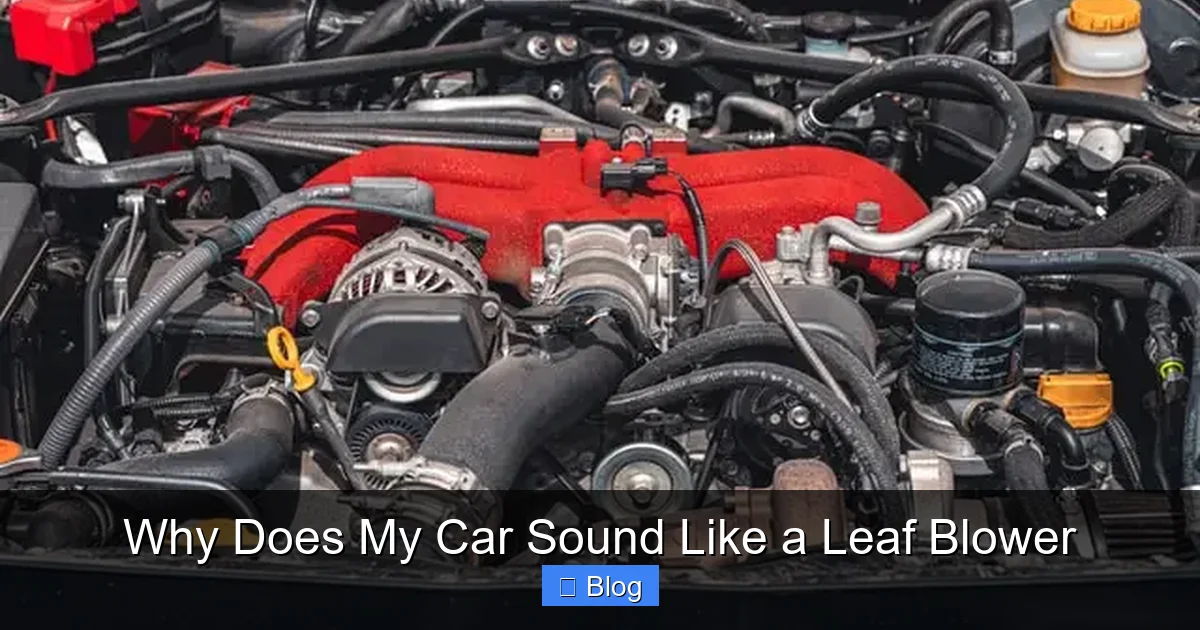
Why Does My Car Sound Like a Leaf Blower
If you’ve ever wondered why does my car sound like a leaf blower, it’s often due to high-pitched whining from mechanical issues like turbochargers or exhaust leaks. This guide breaks down the common causes, step-by-step diagnosis, and easy fixes to help you get back on the road safely. Don’t ignore it—addressing the noise early prevents bigger problems.
Key Takeaways
- High-pitched whining often signals turbo or belt issues: These are top reasons why your car sounds like a leaf blower, especially in modern vehicles.
- Exhaust leaks can mimic leaf blower sounds: Listen for noises that get louder under acceleration to pinpoint this common culprit.
- DIY diagnosis starts with a visual check: Inspect belts, hoses, and the turbo for wear without needing fancy tools.
- Safety first during inspections: Always work on a cool engine to avoid burns or injuries.
- Professional help if unsure: Complex fixes like turbo repairs are best left to mechanics to avoid costly mistakes.
- Regular maintenance prevents noises: Keep up with oil changes and belt inspections to stop leaf blower-like sounds before they start.
Quick Answers to Common Questions
Is the noise worse when accelerating?
Yes, that often points to turbo or exhaust issues. Rev gently in park to confirm, then inspect those areas first.
Can I drive with this sound?
Short distances might be okay, but avoid highways. It could worsen and cause breakdowns or safety risks.
What’s the cheapest fix?
Often a loose belt or hose clamp—under $10 and 15 minutes. Check visuals before buying parts.
Does car age matter?
Older cars (over 10 years) are prone to rust-related exhaust leaks. Newer ones? Look at turbos first.
Should I use additives?
For fuel pumps, yes—octane boosters can help temporarily. But fix the root cause, don’t mask it.
Step-by-Step Diagnosis: How to Figure Out the Problem
Now that you know the possibles, let’s diagnose safely. Park on a level surface, engage the parking brake, and let the engine cool. Wear gloves and eye protection—hot parts can burn.
Step 1: Listen and Locate the Sound
Start the car and note when the noise happens. Does it whine at idle, during acceleration, or when turning? Open the hood and use a mechanic’s stethoscope (or a long screwdriver as a makeshift one) to pinpoint the source. If it’s from the front, suspect belts or turbo. Rear sounds might mean exhaust or fuel pump.
Pro tip: Record the sound on your phone. Play it back or share with a mechanic for better advice.
Step 2: Visual Inspection Under the Hood
With the engine off, pop the hood and look for obvious issues. Check belts for fraying or looseness—press on them; they should deflect about half an inch. Inspect hoses for cracks, especially around the turbo and intake manifold. Look for oil leaks or loose clamps, which could cause why does my car sound like a leaf blower noises.
- Shine a flashlight into tight spots.
- Wipe down components to spot fresh leaks.
- Feel for play in pulleys by hand.
Step 3: Test Drive with Focus
Take a short, safe drive. Note if the sound changes with RPMs or load. For example, if it quiets when you turn off the AC, it’s likely a belt. If it persists at high speeds, check tires or bearings—sometimes wheel noise mimics engine whines.
Warning: Don’t drive if the noise comes with smoke, vibrations, or power loss. Tow it instead.
Step 4: Simple At-Home Tests
For exhaust suspicions, rev the engine and listen for hisses. Spray soapy water on joints; bubbles mean a leak. For vacuum issues, use carb cleaner spray—engine RPM changes if it hits a leak. These tests are low-cost and quick.
Example: On my old Honda, a simple hose clamp tighten fixed a whistling intake. Saved me a shop visit!
Fixing the Issue: Hands-On Solutions
Once diagnosed, many fixes are DIY-friendly. Always consult your owner’s manual for specifics.

Visual guide about Why Does My Car Sound Like a Leaf Blower
Image source: autoily.com
Addressing Belt and Pulley Problems
If belts are worn, replacement is straightforward. Loosen the tensioner pulley with a wrench, slip off the old belt, and route the new one per the diagram (often on the hood sticker). Tighten and test. Cost: $20-50 for the belt. Takes 30 minutes.
For pulleys, if one’s wobbling, it might need alignment or replacement. Use a socket set to remove it.
Repairing Exhaust Leaks
Small leaks can be patched with exhaust tape or sealant temporarily. For bigger ones, replace the affected pipe section. Jack up the car safely, unbolt the pipe, and swap it. If it’s the muffler, cut and clamp a new one. Pro tip: Wear a mask—exhaust fumes are toxic.
Handling Intake and Vacuum Leaks
Tighten loose clamps first. Replace cracked hoses with universal ones from an auto parts store. Cut to length, secure with zip ties if needed. Test by running the engine after fixes.
Turbocharger Fixes: When to Go Pro
Turbo issues often need specialized tools. Clean the intercooler if dirty, but for bearing wear, it’s shop time. Expect $500-2000 in repairs. Why does my car sound like a leaf blower from a turbo? It’s the spinning impeller struggling—don’t delay, as it can grenade and damage the engine.
Practical example: A friend ignored his BMW’s whine; it led to a $3000 rebuild. Lesson learned!
Troubleshooting Advanced or Persistent Noises
If basic checks don’t solve it, dig deeper. Fuel pumps can whine if clogged—listen at the tank with the key on. Wheel bearings hum at speed; jack the car and check for roughness. Electrical issues, like a failing alternator, might cause accessory strain.

Visual guide about Why Does My Car Sound Like a Leaf Blower
Image source: autotechiq.com
Introduction
Have you noticed your car making a strange, high-pitched whining noise that reminds you of firing up a leaf blower in the driveway? You’re not alone. Many drivers search for answers to why does my car sound like a leaf blower, especially when the sound kicks in during acceleration or idling. This guide will walk you through the most likely causes, how to diagnose the problem step by step, and what to do next. By the end, you’ll have the knowledge to tackle the issue yourself or know when to call in a pro. Let’s quiet down that annoying racket and get your ride running smoothly again.
Understanding the Leaf Blower-Like Sound in Your Car
That distinctive whirring or whining noise isn’t just annoying—it’s your car’s way of signaling something’s off. Cars don’t naturally sound like power tools, so when they do, it’s time to pay attention. The sound often comes from components under the hood that involve air flow, pressure, or friction. Think turbochargers, belts, or exhaust systems. Ignoring it could lead to bigger issues like engine damage or safety risks on the road.
Why does this happen? Modern cars rely on efficient air and exhaust management for performance. When parts wear out or fail, they create turbulent air sounds similar to a leaf blower’s fan. The noise might vary by engine type—gas, diesel, or hybrid—but the principles are the same. In the next sections, we’ll dive into the causes and fixes.
Common Causes: Why Does My Car Sound Like a Leaf Blower?
Pinpointing the reason starts with knowing the usual suspects. High-pitched sounds like a leaf blower often stem from a few key areas. Let’s break them down.
Turbocharger Problems
Turbochargers boost engine power by forcing extra air into the cylinders. If yours is failing, it can whine loudly, especially under load. Worn bearings or a damaged impeller might be to blame. This is common in turbo-equipped cars like many VWs or Subarus.
Exhaust System Leaks
A hole or loose connection in the exhaust can let high-pressure gases escape with a shrill hiss. It might sound just like a leaf blower starting up, particularly when revving the engine. Check for rust or corrosion in older vehicles.
Worn Accessory Belts or Pulleys
Serpentine belts drive things like the alternator and power steering. If they’re slipping or a pulley is misaligned, you’ll hear a whining noise that mimics air rushing through a blower. This often gets worse with steering or electrical load.
Intake or Vacuum Leaks
Cracked hoses in the air intake system can suck in air unevenly, creating a high-pitched whistle. It’s like the car is trying to breathe through a straw—inefficient and noisy.
These causes cover most cases of why does my car sound like a leaf blower. But to confirm, you need to diagnose properly.
Troubleshooting Cheat Sheet
| Possible Cause | Symptoms | Quick Check | DIY Fix Level |
|---|---|---|---|
| Turbocharger Issue | Whine increases with speed; power loss | Listen under hood during acceleration | Inspect only; pro repair |
| Exhaust Leak | Hiss at idle, louder when revving | Feel for escaping air near pipes | Easy patch if small |
| Worn Belt/Pulley | Noise with steering or AC on | Visual inspection for cracks | Replace belt yourself |
| Intake Leak | Whistle on startup; rough idle | Spray carb cleaner on hoses | Tighten or replace hose |
| Vacuum Pump Failure | Constant high pitch; brake issues | Check vacuum lines for cracks | Professional diagnosis |
| Wheel Bearing Wear | Whine from wheels, not engine | Jack up and spin wheel | Replace bearing |
| Fuel Pump Strain | Whine from rear; hard starts | Listen near fuel tank | Replace pump |
If the sound is intermittent, track conditions: weather, fuel type, or load. Scan for error codes with an OBD-II reader ($20 online)—many modern cars store them for noises tied to sensors.
Still stumped? Note symptoms in a log: when, where, how loud. This helps mechanics diagnose faster, saving you money.
Prevention: Keep the Leaf Blower Sounds Away
The best fix is prevention. Change oil regularly—dirty oil starves turbos. Inspect belts every 10,000 miles. Use quality fuel to avoid pump strain. For exhaust, apply anti-rust treatments in salty areas.
Annual tune-ups catch issues early. Apps like Torque can monitor engine health via your phone’s OBD connection.
Conclusion
Figuring out why does my car sound like a leaf blower doesn’t have to be overwhelming. From turbo woes to simple belt slips, this guide arms you with the steps to diagnose and fix most causes. Start with listening and inspecting, then tackle repairs confidently. If it’s beyond DIY, a trusted mechanic can handle the rest. Drive safe, stay quiet, and enjoy the road without that pesky whine. Your car will thank you!