

Why Is My Stihl Leaf Blower Bogging Down?
Why is my Stihl leaf blower bogging down? The most common reasons are a clogged air filter, dirty carburetor, old fuel, or a blocked fuel line that restricts proper airflow or fuel delivery. When these parts don’t work correctly, the engine can’t maintain power, causing it to sputter or lose performance under load.
Another possible cause is a faulty spark plug or incorrect fuel mixture. If the spark plug is worn out or the fuel ratio isn’t balanced, the engine may struggle to ignite properly. This can lead to hesitation, stalling, or reduced efficiency while using the blower.
Regular maintenance is key to preventing this issue. Cleaning or replacing filters, using fresh fuel, and checking engine components can help keep your leaf blower running smoothly. Addressing these problems early can restore full power and extend the life of your equipment.
Why Is My Stihl Leaf Blower Bogging Down
Hey there, fellow yard enthusiast! If you’ve ever fired up your trusty Stihl leaf blower only to have it sputter and lose power mid-job, you’re not alone. Bogging down means the engine hesitates, stalls, or runs unevenly, especially under load. It’s frustrating, right? But don’t worry—this guide is here to help you figure out why is my Stihl leaf blower bogging down and get it running smoothly again.
In the next few sections, you’ll learn what causes this issue, how to troubleshoot step by step, and tips to prevent it in the future. Whether you’re dealing with a gas-powered handheld model like the Stihl BG 56 or a backpack blower like the BR 600, these steps apply. By the end, you’ll feel confident tackling the problem yourself. Let’s dive in!
Step 4: Clean the Carburetor
If basics don’t cut it, the carburetor might be varnished. This small part meters fuel and air.
- Remove the air filter box to access it. Most Stihl models have a single screw.
- Spray carb cleaner through the intake while the throttle is open. Avoid disassembling unless experienced.
- For deeper clean: Shut off fuel, remove carb (note bolt positions), soak in cleaner overnight.
- Reassemble, adjust idle screw if needed (clockwise for higher RPM), and test.
Warning: If you’re not handy, skip to professional help. A botched carb job can worsen things.
Step 5: Check the Exhaust and Fuel Lines
Remove the muffler cover—usually two bolts. Inspect the spark arrestor screen inside.
- Brush off carbon or soak in solvent. Reinstall tightly.
- Examine fuel lines for cracks or leaks. Squeeze gently; replace if brittle.
- Check the fuel filter (in tank or line). Pull it out with a hook and swap if dirty.
These steps often reveal hidden issues. Run the blower for 10 minutes post-clean to break in.
Key Takeaways
- Dirty Air Filter: A clogged air filter restricts airflow, causing the engine to bog down during use; clean or replace it every 25 hours of operation.
- Old or Bad Fuel: Stale gasoline leads to poor combustion; always use fresh fuel mixed with the right oil ratio for 2-stroke engines.
- Carburetor Issues: Dirt or varnish buildup in the carburetor can disrupt fuel flow; a simple cleaning often resolves bogging.
- Spark Plug Problems: A fouled or worn spark plug prevents proper ignition; inspect and gap it correctly for smooth performance.
- Exhaust Blockage: A clogged muffler or spark arrestor reduces engine power; regular cleaning prevents this common issue.
- Overloading the Blower: Trying to blow heavy wet leaves can strain the engine; use in short bursts and clear debris gradually.
- Regular Maintenance: Following Stihl’s service schedule prevents most bogging problems and extends your tool’s life.
Quick Answers to Common Questions
Tip: Always Start with Fuel?
Yes! Old gas is the #1 cause of bogging in Stihl blowers. Drain and replace it first to avoid wasting time on other fixes.
Question: How Often Should I Clean the Air Filter?
Check it after every 10-15 uses or weekly during peak season. A clean filter prevents up to 50% of bogging issues.
Tip: Use the Right Oil Mix?
Stick to 50:1 ratio with high-quality 2-stroke oil. Wrong mix leads to smoky, bogging engines—Stihl’s premix is foolproof.
Question: Can Wet Leaves Cause Bogging?
Absolutely. Heavy, wet debris overloads the motor. Dry leaves first or use in bursts to avoid strain.
Tip: Test Run After Repairs?
Always idle for 5 minutes, then test under load. This ensures no leaks and confirms smooth power delivery.
Advanced Maintenance Tips to Prevent Bogging
Prevention beats cure every time. Keep your Stihl in top shape with these habits.
Store it properly: Drain fuel or run dry before winter. Hang it upright to avoid oil leaks. Clean after each use—wipe down the intake and exhaust. Follow Stihl’s manual for service intervals: Air filter every 25 hours, spark plug every 100.
Practical example: I schedule monthly checks for my blowers. It saves headaches during fall leaf season. Also, avoid over-revving or using on wet debris, which strains the engine.
If bogging happens often, consider upgrading to a model with electronic fuel injection, like some newer Stihls, for less maintenance.
Troubleshooting When It’s Not Obvious
Sometimes, the issue isn’t straightforward. If your blower bogs only in certain conditions—like hot weather—it could be vapor lock in the fuel line. Insulate lines or use premium gas.
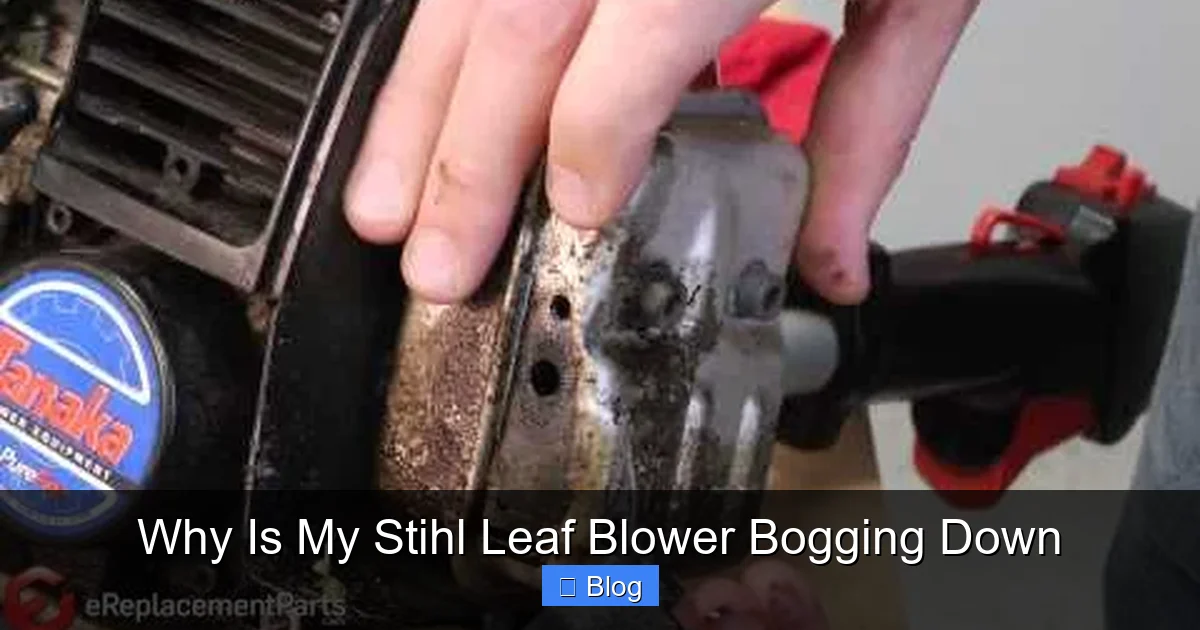
Visual guide about Why Is My Stihl Leaf Blower Bogging Down
Image source: thrivingyard.com
Understanding Why Your Stihl Leaf Blower Bogs Down
First things first: what exactly is bogging down? It’s when your leaf blower’s engine struggles to maintain speed or power. You might notice it revving high but then choking when you point it at a pile of leaves. This happens because the engine isn’t getting the right mix of air, fuel, and spark to run efficiently.

Visual guide about Why Is My Stihl Leaf Blower Bogging Down
Image source: thrivingyard.com
Stihl leaf blowers are built tough, but they’re sensitive to maintenance lapses. Common culprits include fuel that’s gone bad, clogged filters, or even operator habits like overloading the tool. Understanding these basics will make troubleshooting easier. For example, if your blower bogs only after warming up, it points to fuel delivery issues. If it’s right from startup, check the spark system.
Now, let’s break down the most likely causes. We’ll cover them in detail so you can pinpoint the problem quickly.
Common Causes of Bogging in Stihl Leaf Blowers
Stihl blowers, like any 2-stroke engine tool, rely on a precise balance. When that balance tips, bogging occurs. Here are the top reasons why is my Stihl leaf blower bogging down.
Fuel-Related Problems
Fuel is the lifeblood of your blower. Old gas, with its ethanol content, breaks down and gums up the system. If you’ve left fuel in the tank over winter, that’s a prime suspect. The wrong oil-to-gas ratio—Stihl recommends 50:1 for most models—can also cause incomplete combustion, leading to bogging.
Tip: Always use fresh, ethanol-free gas if possible. Drain the tank and refill with a stabilizer like Stihl’s MotoMix for best results.
Airflow Restrictions
Your blower needs clean air to breathe. A dirty air filter blocks intake, starving the engine of oxygen. This is especially common after blowing dusty areas or dry leaves. Similarly, a clogged fuel filter inside the tank can restrict gas flow.
Example: I once had a Stihl FS 56 trimmer that bogs just like a blower. Turns out, the air filter was caked with pollen after spring cleanup. A quick clean fixed it instantly.
Ignition and Spark Issues
The spark plug ignites the fuel-air mix. If it’s fouled with carbon or oil, or if the gap is off, the engine won’t fire properly. Worn ignition coils can also weaken the spark over time.
A practical check: Remove the plug and inspect it. Black and sooty? Clean it. If it’s worn, replace with a Champion RCJ6Y or equivalent for most Stihl models.
Exhaust System Blockages
Don’t overlook the exhaust. The muffler and spark arrestor screen can clog with carbon buildup, trapping gases and reducing power. This causes the engine to bog under load as backpressure builds.
Stihl blowers run hot, so check this every 50 hours of use. Tap out debris or soak the screen in cleaner if needed.
Troubleshooting Step by Step
Ready to roll up your sleeves? Follow these steps in order to diagnose why is my Stihl leaf blower bogging down. Start with the simplest checks—they often fix the issue without tools.
Step 1: Check and Refresh the Fuel
Begin here because it’s easy and common. Turn off the blower and let it cool.
- Drain the old fuel into a safe container using the tank’s drain plug or by tipping carefully.
- Inspect for water or debris in the tank. If present, flush with fresh gas.
- Mix new fuel: 50 parts unleaded gas to 1 part 2-stroke oil. Shake well.
- Refill and let it sit for a minute. Start the blower and test on idle.
If it still bogs, move on. Pro tip: Run the tank empty every few weeks to avoid staleness.
Step 2: Inspect the Air Filter
Locate the air filter cover—usually on the side of the engine housing. Unscrew or unclip it.
- Remove the filter. If it’s foam, wash with soapy water and dry completely. For paper filters, tap gently or replace if torn.
- Check the filter box for dirt buildup and wipe clean.
- Reinstall and run the blower. Rev it up and see if power returns.
This step alone solves bogging for many users. Do it monthly during heavy use.
Step 3: Examine the Spark Plug
Tools needed: Spark plug wrench (often included with Stihl kits).
- Disconnect the spark plug wire for safety.
- Unscrew the plug and pull it out. Check for fouling—black deposits mean rich fuel mix; white means lean.
- Clean with a wire brush or replace. Set gap to 0.02 inches using a feeler gauge.
- Reinstall, reconnect, and test. Bogging during acceleration? This could be it.
Example: On my Stihl BR 200, a gapped plug fixed intermittent bogging after wet weather use.
You’re now about halfway through troubleshooting. If the problem persists, let’s look at a quick reference to guide your next moves.
Troubleshooting Cheat Sheet
| Symptom | Possible Cause | Quick Fix |
|---|---|---|
| Bogs at startup | Old fuel or water contamination | Drain and refill with fresh 50:1 mix |
| Bogs under load | Clogged air filter | Clean or replace filter |
| Hesitates when accelerating | Fouled spark plug | Clean, gap, or replace plug |
| Uneven idle | Dirty carburetor | Spray with carb cleaner or disassemble |
| Loss of power overall | Blocked exhaust | Clean muffler and spark arrestor |
| Bogs after long run | Fuel filter clog | Replace inline fuel filter |
| Smoky exhaust with bog | Wrong oil ratio | Use correct 50:1 mix and drain old fuel |
| No improvement after basics | Ignition coil failure | Test with multimeter or take to dealer |
Listen to the engine: A high-pitched whine might mean air leaks in hoses. Spray soapy water around connections; bubbles indicate a seal problem. For electrical issues in battery models (though rare for bogging), check connections.
If you’ve followed all steps and still wonder why is my Stihl leaf blower bogging down, it might be internal wear like a scored piston. Time for a pro.
When to Call a Professional
DIY is great, but know your limits. If cleaning doesn’t help or you see metal shavings in the exhaust, stop. Take it to an authorized Stihl dealer—they have diagnostic tools for deeper issues like compression loss.
Cost-wise, basic service runs $50-100, versus $200+ for major repairs. Better safe than buying a new blower!
Conclusion
There you have it—a full roadmap to solving why is my Stihl leaf blower bogging down. From fresh fuel to carb cleans, these steps should get your machine purring again. Remember, regular care keeps it reliable for seasons to come.
Grab your tools, follow along, and enjoy a frustration-free yard. If this guide helped, share your success story in the comments. Happy blowing!