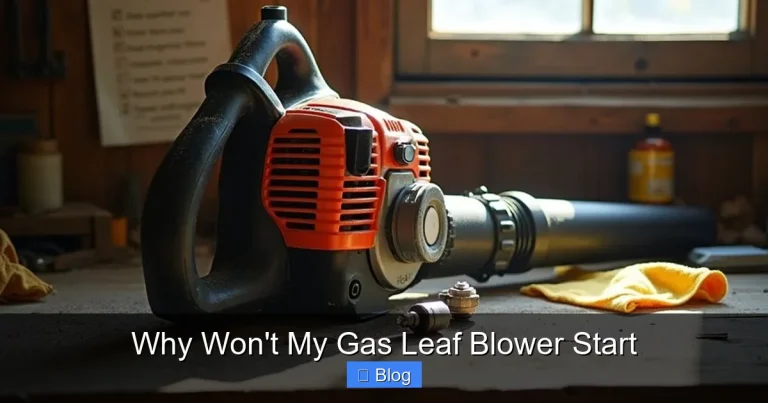

Why Is My Echo Leaf Blower Losing Power
If you’re wondering why is my Echo leaf blower losing power, it could be due to simple issues like dirty air filters or fuel problems. This guide walks you through troubleshooting steps to diagnose and fix the problem quickly. Regain full power without needing a pro in most cases.
Key Takeaways
- Dirty air filter: A clogged filter restricts airflow, causing power loss; clean or replace it every 25 hours of use.
- Fuel issues: Old or contaminated fuel leads to poor engine performance; always use fresh, ethanol-free gas.
- Spark plug problems: A worn or fouled spark plug weakens ignition; inspect and gap it correctly for optimal power.
- Carburetor buildup: Dirt and varnish in the carburetor disrupt fuel flow; cleaning it often restores smooth operation.
- Exhaust restrictions: Blocked muffler or spark arrestor reduces engine efficiency; clear them to boost power.
- Overheating: Running without breaks can cause power dips; ensure proper cooling and avoid overloading the blower.
Quick Answers to Common Questions
Always use fresh fuel?
Yes, mix gas and oil right before use. Stale fuel clogs everything and causes power loss in Echo blowers.
What’s the right spark plug gap?
Set it to 0.024-0.028 inches for most models. Too wide or narrow weakens the spark and drops power.
Can I run without the air filter?
No way— it protects the engine from debris. A missing filter leads to quick damage and power issues.
How often to clean the carb?
Every 50-100 hours or if it starts surging. A quick spray clean keeps fuel flowing smooth.
Is power loss normal with age?
Not really—regular care keeps it strong. If it’s old, check wear parts like the piston for real decline.
Introduction
Hey there, fellow yard warrior! If you’ve ever been in the middle of clearing leaves and suddenly thought, “Why is my Echo leaf blower losing power?”, you’re not alone. Echo leaf blowers are reliable workhorses, but like any tool, they can run into snags that sap their strength. In this guide, we’ll dive deep into the reasons behind power loss and show you how to fix them step by step.
By the end, you’ll know how to troubleshoot common culprits, from simple maintenance oversights to trickier engine issues. Whether you’re dealing with a gas-powered handheld or backpack model, these tips will help you get back to blowing strong. Let’s rev up and get started—no fancy tools required for most fixes.
Understanding Why Your Echo Leaf Blower Loses Power
Power loss in your Echo leaf blower usually stems from the engine not getting what it needs: clean air, fresh fuel, or a strong spark. It might start fine but bog down under load, or it could hesitate right from the pull. Spotting the signs early prevents bigger headaches.

Visual guide about Why Is My Echo Leaf Blower Losing Power
Image source: unifiedgarden.com
For example, if it’s a sudden drop during heavy use, think airflow or heat. Gradual weakening over time? Fuel or maintenance issues are likely. Echo models, like the PB-580T or PB-770, share similar systems, so these steps apply broadly.
Common Causes of Power Loss
Let’s break down the top reasons why your Echo leaf blower might be losing power. We’ll cover each one with real-world examples to help you pinpoint the problem fast.

Visual guide about Why Is My Echo Leaf Blower Losing Power
Image source: leafblowerhire.co.uk
Clogged Air Filter
The air filter is your blower’s first line of defense against dirt. When it’s dirty, it chokes the engine, reducing power like a straw that’s half-blocked. This is super common after fall cleanup sessions.
Check it first—it’s an easy win. If your blower feels sluggish on startup, a quick filter clean could be all it takes.
Fuel System Problems
Old gas is the enemy. Ethanol in pump fuel absorbs water and gums up the works, leading to weak combustion. If you stored your Echo over winter without stabilizer, this could be why it’s losing power now.
Pro tip: Always mix fuel fresh and use a stabilizer like Echo’s Red Armor for storage.
Worn Spark Plug
The spark plug ignites the fuel-air mix. If it’s fouled with carbon or oil, or the gap is off, you’ll get incomplete burns and power dips. Echo recommends checking it every 50 hours.
Picture this: Your blower runs great cold but fades as it warms—classic spark issue.
Carburetor Issues
The carburetor mixes fuel and air. Buildup from dirty fuel clogs jets, starving the engine. This often shows as surging power or stalling under load.
Don’t fear it—cleaning is straightforward with the right kit.
Exhaust Blockages
A clogged muffler or spark arrestor traps gases, backpressuring the engine. Debris from leaves can sneak in here, especially on handheld models used near ground level.
Troubleshooting Cheat Sheet
Before diving into full repairs, use this quick reference to match symptoms to fixes. It covers the most frequent power loss scenarios for Echo leaf blowers.
| Problem | Symptom | Possible Cause | Quick Fix |
|---|---|---|---|
| Gradual power fade | Weakens over time | Dirty air filter | Clean or replace filter |
| Sudden hesitation | Bogs down on startup | Stale fuel | Drain and refill with fresh gas |
| Inconsistent RPM | Surging or stalling | Fouled spark plug | Inspect, clean, and regap plug |
| Loss under load | Drops when blowing hard | Clogged carburetor | Clean jets with carb cleaner |
| Overheating and drop | Hot engine loses strength | Blocked exhaust | Clear muffler and spark arrestor |
| Uneven idle | Rough running at low speed | Fuel line air leak | Tighten connections and check lines |
| Black smoke with loss | Visible exhaust and weak power | Oil in fuel mix | Use correct 50:1 ratio |
Step-by-Step Troubleshooting Guide
Now, let’s roll up our sleeves. Follow these steps in order to diagnose why your Echo leaf blower is losing power. Start with the basics—they fix 80% of issues. Work in a well-ventilated area, and wear gloves for safety.
Step 1: Inspect and Clean the Air Filter
Turn off the blower and let it cool. Locate the air filter cover—on most Echo models, it’s near the carburetor, secured by clips or screws.
- Remove the cover and pull out the foam or paper filter.
- Tap off loose dirt, then wash foam filters with soapy water. Dry completely.
- For paper filters, replace if torn or overly dirty.
- Reinstall and test. If power returns, great! If not, move on.
Tip: Do this every 10-25 hours. A clean filter can boost airflow by 30%, restoring full throttle.
Step 2: Check the Fuel System
Fuel woes are sneaky. Echo blowers run on a 50:1 gas-to-oil mix, so get that right first.
- Drain the tank using the primer bulb or siphon. Dispose of old fuel safely.
- Inspect the fuel lines for cracks or leaks—squeeze them; they should be firm.
- Refill with fresh, unleaded gas mixed 50:1 with 2-stroke oil. Add stabilizer if storing soon.
- Prime the bulb 5-7 times and start. Run for a few minutes to circulate.
Example: Last fall, I fixed a friend’s PB-403 by swapping stale gas—power surged back instantly.
Step 3: Examine the Spark Plug
This is a five-minute job that packs a punch.
- Disconnect the spark plug wire for safety.
- Use a socket wrench to remove the plug—Echo uses standard 14mm ones.
- Check for black soot (rich mix) or white ash (lean). Clean with a wire brush if needed.
- Set the gap to 0.024-0.028 inches using a feeler gauge. Reinstall and torque to 150 inch-pounds.
- Reconnect and test under load.
If it’s worn, replace with an OEM like NGK BPMR7A. This often revives a dying engine.
Step 4: Clean the Carburetor
If basics don’t cut it, the carb needs attention. You’ll need a carb cleaner spray and small tools.
- Remove the air filter and carb cover. On Echo models, the carb bolts right off.
- Spray cleaner into the jets and throat—avoid the diaphragm.
- Let it soak for 10 minutes, then wipe out residue. Reassemble carefully.
- Adjust idle screw if needed: Turn until it runs smooth without stalling.
Practical note: For backpack models like the PB-8010, access is easier with the unit upright. If you’re not comfy, a rebuild kit costs under $20.
Step 5: Clear Exhaust and Muffler
Exhaust blockages build up over time.
- Let the engine cool completely.
- Remove the muffler bolts (usually two) and pull it off.
- Shake out carbon from the ports and clean the spark arrestor screen with a wire brush.
- Reinstall and check for leaks with soapy water—bubbles mean tighten up.
This step shines for power loss after heavy use. It frees up backpressure, letting the engine breathe.
Step 6: Check for Overheating or Overload
Sometimes it’s not a part—it’s how you’re using it.
- Ensure vents are dust-free; blow them out with compressed air.
- Avoid full throttle for more than 5 minutes straight—give it breaks.
- If it’s a variable speed model, don’t max it constantly in thick debris.
Tip: In hot weather, power dips more, so work in bursts.
Advanced Troubleshooting and When to Call a Pro
If these steps don’t restore power, dig deeper. Compression test the engine with a gauge—under 90 PSI means piston rings or valves are shot. Or, check the ignition coil for weak sparks.
For electrical issues on battery models (like the DPBS-1800), test the battery voltage—it should hold 18V under load.
Signs to seek help: Persistent smoke, odd noises, or if it’s under warranty (Echo’s is two years). Take it to an authorized dealer; DIY beyond basics risks voiding coverage.
Remember, regular tune-ups prevent most power loss. Echo’s manual has model-specific specs—grab one online if lost.
Preventive Maintenance Tips
Keep your Echo humming with these habits:
- Run it dry before storage to clear fuel lines.
- Store upright in a dry spot, covered.
- After every 50 hours, do a full service: filter, plug, and lube.
- Use Echo-approved parts—they fit perfectly and last.
Example: My PB-580T has 200 hours without major issues thanks to seasonal cleanings. It’s worth the 15 minutes.
Conclusion
There you have it—a full roadmap to tackle why your Echo leaf blower is losing power. From quick air filter swaps to carb cleanings, most fixes are DIY-friendly and save you trips to the shop. Your yard work shouldn’t be a struggle, so grab your tools and get that blower roaring again.
Stay consistent with maintenance, and it’ll reward you with years of reliable power. Got questions? Drop a comment below—we’re all in this yard game together!